Published April 08, 2025 by College of Teacher Education
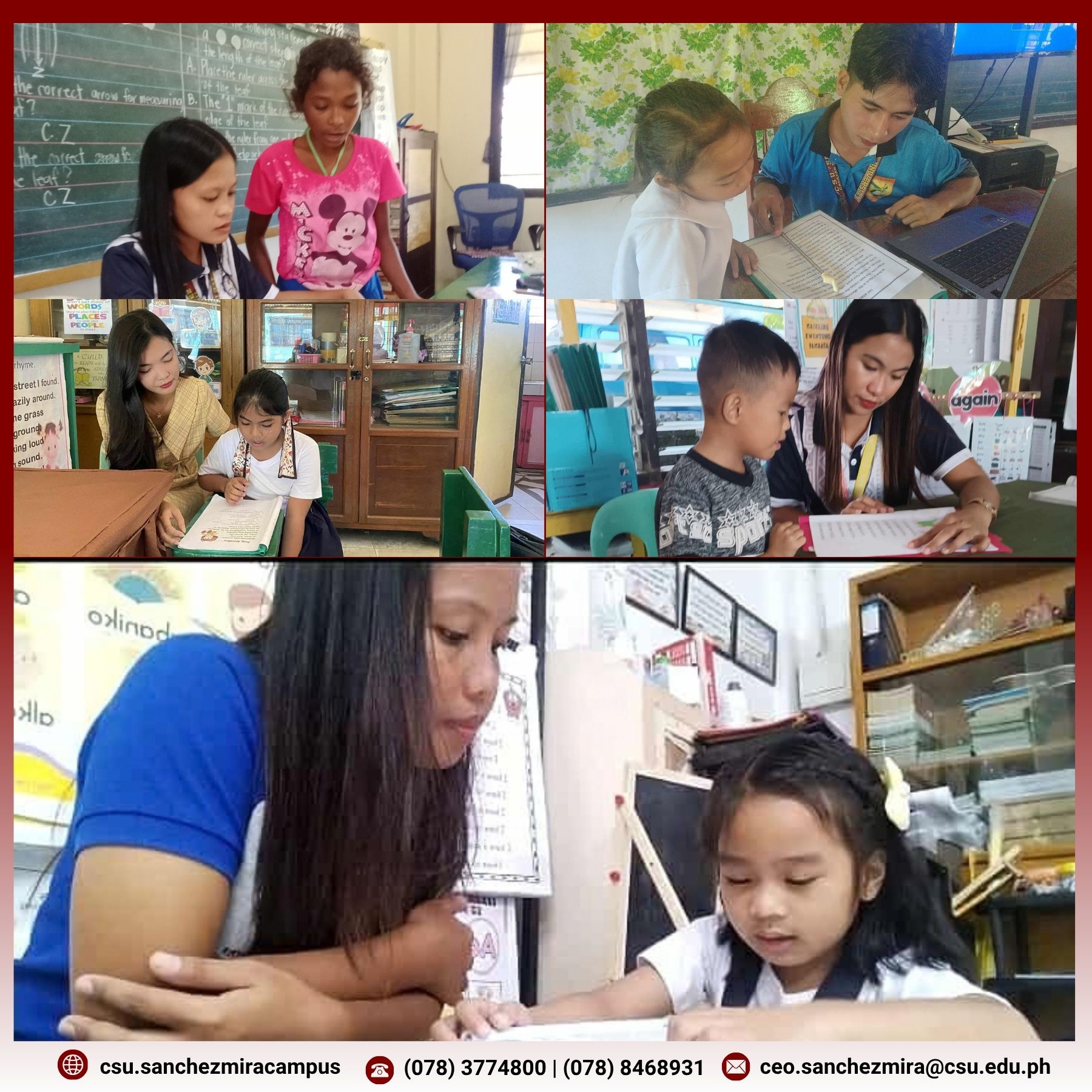
The College of Teacher Education (CTE) of Cagayan State University (CSU)–Sanchez Mira Campus, through its Bachelor of Elementary Education (BEED) program, continued its commitment to promoting quality education through the second year of SARIRIT (Supporting and Advancing Reading Instruction through Remediation, Intervention, and Teaching), implemented from September 2024 to February 2025.
The program sustained its community-based reading intervention efforts to address the literacy needs of struggling elementary learners from four partner schools: Sanchez Mira Central Elementary School, Sanchez Mira West Central Elementary School, Dacal-Pukel Elementary School, and Masisit Elementary School. It provided targeted reading support to Grades 1 to 3 learners identified through the Philippine Informal Reading Inventory (PHIL-IRI) results.
Throughout the six-month implementation, BEED student tutors conducted weekly reading intervention sessions using the Paired Reading Strategy, supported by guided oral reading activities, vocabulary enhancement exercises, and comprehension-building tasks. To strengthen learner engagement, the program utilized contextualized reading kits and story cards designed to reflect the learners’ experiences and local environment.
The implementation also highlighted the significant participation of BEED students in translating their academic preparation into meaningful community service. Fourth-year students served as reading tutors, while second- and third-year students developed contextualized instructional materials, including story cards and comprehension worksheets. First-year students supported the reproduction and organization of learning resources. Faculty members provided technical guidance, supervised material development, coordinated program activities, and monitored the overall implementation to ensure the effectiveness and quality of the intervention.
To ensure organized implementation and effective monitoring of learner progress, the program utilized various documentation and tracking mechanisms, including weekly activity checklists, monthly monitoring summary sheets, individual learner progress records, photo documentation, and faculty supervision reports. These tools helped ensure consistent delivery of reading services and provided evidence of learner development throughout the intervention period.
The second year of SARIRIT produced encouraging outcomes. Based on the PHIL-IRI posttest results conducted by partner schools in March 2025, participating learners demonstrated improvements in reading performance, including a decrease in the number of non-readers and frustration-level readers, as well as increased oral reading fluency and comprehension skills. School teachers and administrators also observed improvements in learners’ confidence, motivation, and participation in classroom activities. The contextualized reading materials developed through the program continued to serve as useful instructional resources even after the completion of the intervention.
Beyond supporting elementary learners, SARIRIT provided BEED students with valuable opportunities to apply their knowledge and skills in actual teaching contexts. Through their involvement in reading instruction, instructional material development, and learner-centered interventions, student participants strengthened their competencies as future elementary educators while contributing to the educational needs of partner communities.
Through the continued implementation of SARIRIT, CSU–Sanchez Mira Campus reaffirmed its commitment to advancing literacy through research-informed, learner-focused, and community-responsive initiatives. The second year of the program emphasized the importance of sustained collaboration between the university and partner schools in addressing literacy challenges and creating meaningful learning opportunities for young learners.